
Marion County Unclaimed Money Records
Marion County residents in Marion, Mullins, and surrounding communities may have unclaimed money sitting in the South Carolina state database. These funds come from banks, insurers, utility companies, and other businesses that lost contact with account owners. South Carolina law requires those holders to transfer dormant assets to the State Treasurer, where they remain available for the rightful owner or an heir to recover at any time. The search costs nothing, and the state returns the full amount when a valid claim is approved.
Marion County Quick Facts
Marion County Government and Unclaimed Property
Marion County does not maintain a dedicated unclaimed property database at the county level. Residents use the statewide search portal operated by the South Carolina State Treasurer to look up and claim any funds held in their name. The county government site at marionsc.org provides local government information, but unclaimed money searches run through the state system. County Council meetings in Marion are streamed live on Facebook, and local residents can stay informed about county news and financial matters through that channel.
The county seat is the city of Marion, and Mullins is the other primary population center. Residents who have lived in either city or in rural parts of the county may have accounts on file with state-regulated holders. A dormant savings account, an uncashed refund check, or a forgotten insurance policy can all end up in the state database after the dormancy period expires. The state holds every dollar until the owner claims it.
Note: Marion County residents do not need to contact county offices to search for unclaimed property. The state portal is the direct and free resource for all searches.
Marion County Unclaimed Money Search Steps
The official search portal for Marion County unclaimed funds is at southcarolina.findyourunclaimedproperty.com. You enter your name, and the system returns all records associated with that name across South Carolina. Try every variation you have used on financial accounts. A maiden name, a middle name used as a first name, or a common nickname might be tied to an old account you no longer think about.
When you find a match, the portal walks you through submitting a claim. Most claims require a government-issued photo ID and a document connecting you to the address listed for the property. For heirs claiming on behalf of a deceased owner, additional records such as a death certificate or letters testamentary may be needed. The State Treasurer's office can be reached at (803) 737-4771 or by email at unclaimed@sto.sc.gov if you have questions about the process.
The program overview page at treasurer.sc.gov lists frequently asked questions, the types of property covered, and guidance for special situations like trusts or business accounts. South Carolina has returned more than $420 million to residents statewide, with $36.7 million returned in a single recent year. Marion County residents have claimed their share of those funds over the years.
The screenshot below comes from the South Carolina state treasurer's unclaimed property search portal at southcarolina.findyourunclaimedproperty.com, showing the search interface available to all Marion County residents.
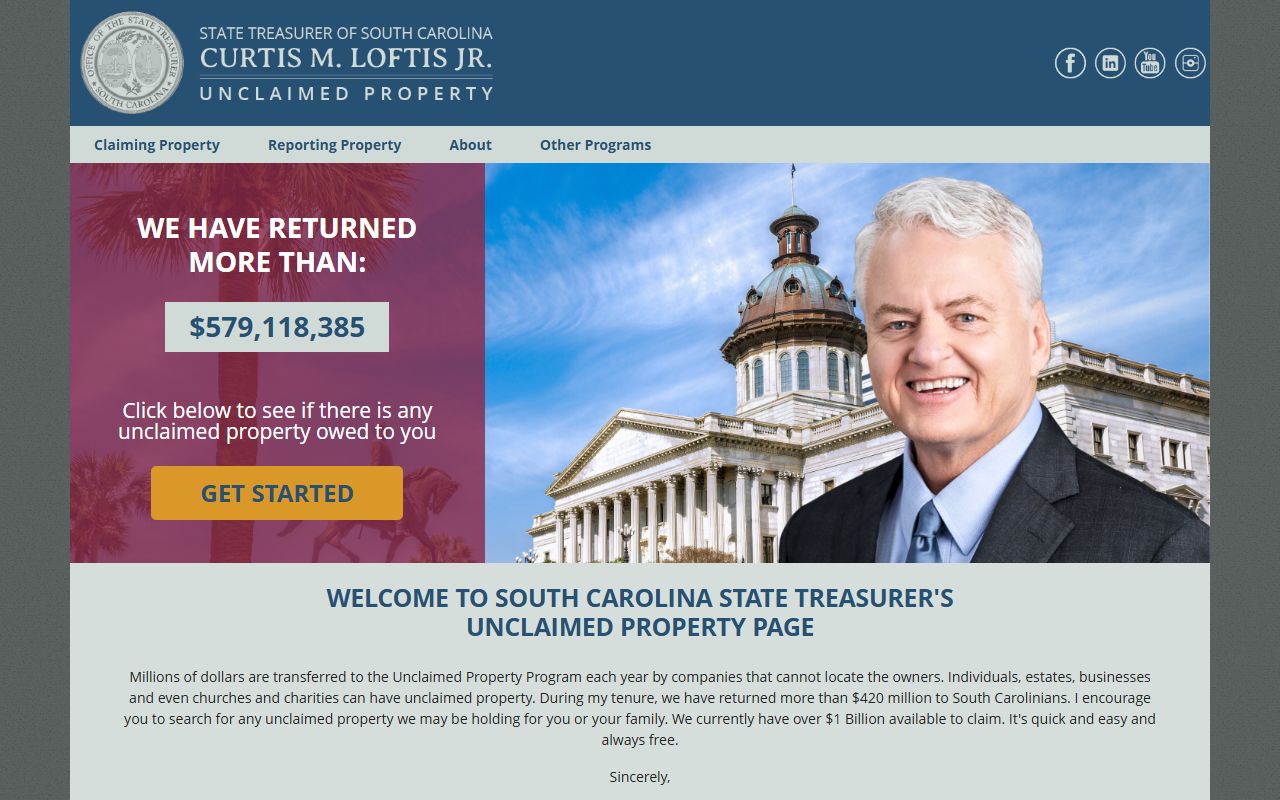
Using this portal is the fastest way to check for unclaimed funds tied to a Marion County address or a name on file with any South Carolina-regulated holder.
Types of Unclaimed Funds Found in Marion County
Bank accounts are the most common source of unclaimed money for Marion County residents. Checking and savings accounts that go inactive for five or more years are reported to the state. Old utility deposits from Marion or Mullins service providers are another frequent source, particularly for renters who moved and never received their security deposit back. Insurance proceeds, annuity payments, and stock dividends round out the most common categories.
Marion County's economy has long been tied to agriculture and small businesses. Workers who received payroll from regional employers may have uncashed checks on record. Business owners who closed accounts or changed banks might have forgotten balances sitting with the state. Checking broadly under all names you have used is the best way to find these older or less obvious accounts.
Former Marion County residents who have since moved to other parts of South Carolina or out of state should still search the portal. Property is matched to the last known address of the owner at the time the account went dormant. Searching under your old Marion or Mullins address, along with your current name, gives you the fullest picture of what may be on file.
Marion County Government Resources
The image below is sourced from the Marion County government website at marionsc.org, which serves as the central hub for local government services, departments, and public information for Marion County residents.
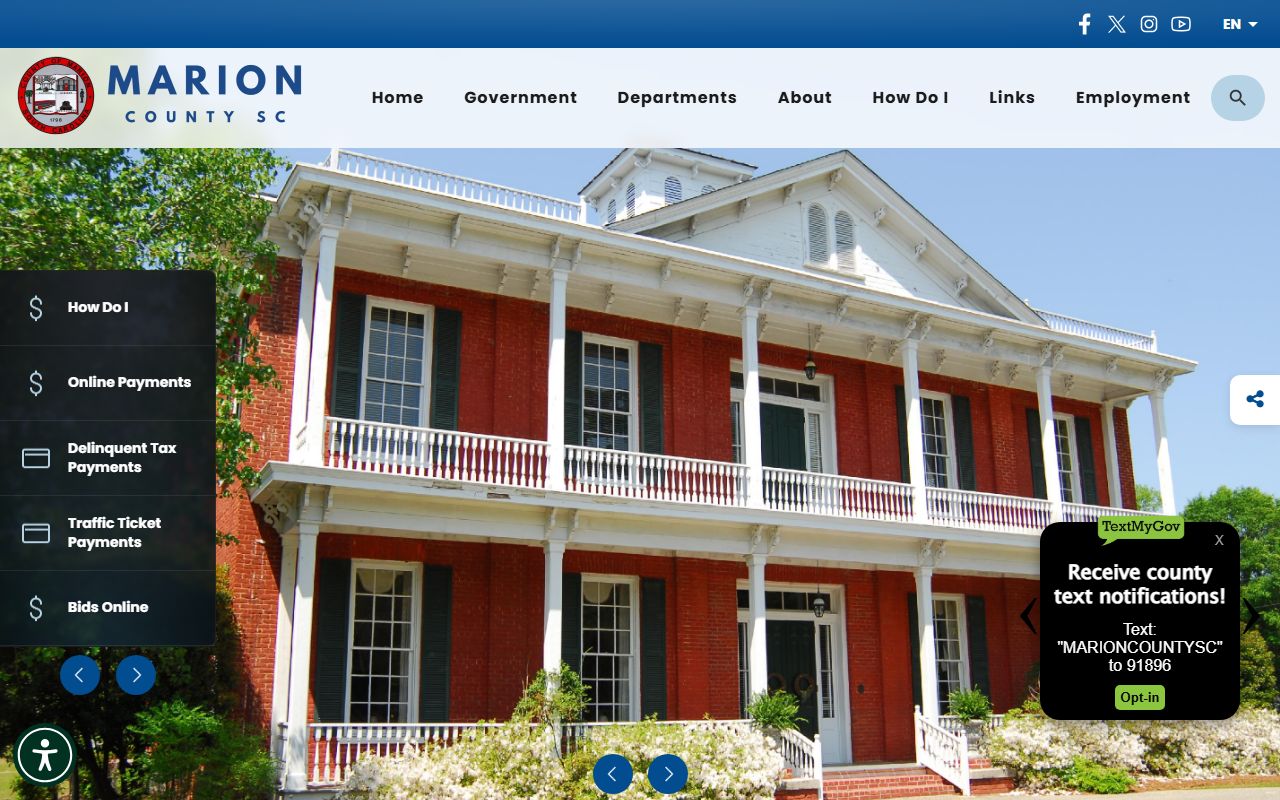
While the county government does not run its own unclaimed property program, county offices including the Treasurer and Auditor handle local tax accounts and financial records. If you believe a county tax refund or credit is owed to you, those offices are the right contact for locally held funds, which are separate from property reported to the state.
South Carolina Dormancy Rules and Reporting
South Carolina's unclaimed property law is found at SC Code Title 27, Chapter 18. This statute controls how and when holders must report dormant property to the State Treasurer. The general dormancy period is five years for most financial accounts. Wages and utility deposits become reportable after just one year. Money orders carry a seven-year period, and travelers checks have a fifteen-year dormancy window before they must be reported.
Holders in Marion County and across the state must file their annual reports and transfer funds to the State Treasurer by November 1 each year. Before transferring funds, they must send written notice to the last known address of the owner at least 120 days before the deadline. This requirement applies to accounts with a balance of $50 or more. The specific rule is in Section 27-18-180, available at law.justia.com.
A full dormancy table showing every property type and its required holding period is published at southcarolina.findyourunclaimedproperty.com/app/dormancy-table. Reviewing this table helps you understand whether a specific account has likely already been reported to the state. If you receive a due-diligence letter from a bank or insurer, respond promptly to keep your account active.
Note: Funds transferred to the state do not expire. You can claim them at any time, even decades after they were reported.
Municipal and Court Unclaimed Property in Marion County
Municipal governments in Marion County are subject to their own reporting requirements under South Carolina law. Local governments that hold funds on behalf of residents must report dormant balances to the State Treasurer. The South Carolina Municipal Association has published guidance on this process at masc.sc. If a Marion or Mullins municipal account was never settled, the balance may have been reported to the state database.
The US Bankruptcy Court for South Carolina holds unclaimed funds from closed bankruptcy cases. That database is separate from the State Treasurer's system. You can search it at scb.uscourts.gov/unclaimed-funds, and the court can be reached at 803-765-5436. Any bankruptcy matter tied to a Marion County address should be checked in this database independently. Both searches are free and straightforward.
County-level funds governed by SC Code Title 4, Chapter 11 set rules for county financial management. Local tax overpayments, unclaimed refunds, or other county-held balances that remain uncollected are subject to these rules. Checking with the Marion County Treasurer or Auditor directly is the best way to resolve any questions about locally held money.
Cities and Communities in Marion County
Marion County includes the city of Marion, the city of Mullins, and several smaller rural communities. All Marion County residents use the same statewide portal to search for unclaimed money, regardless of which town or community they live in.
No featured city pages are available for Marion County at this time. Use the state portal to search all communities.
Nearby Counties
Marion County shares borders with several Pee Dee and coastal counties. Residents who have moved between these areas should search each county's records, since property is tied to the last known address of the owner at the time an account went dormant.