
South Carolina Unclaimed Money Search
South Carolina holds over $1 billion in unclaimed money belonging to residents, former residents, and businesses across the state. The South Carolina State Treasurer runs the Unclaimed Property Program, which collects abandoned funds from banks, insurance companies, utilities, and other holders. These unclaimed accounts sit waiting for their rightful owners to come forward. The search is free, claiming is free, and the state database is updated daily. If you have ever lived, worked, or done business in South Carolina, you may have unclaimed money waiting for you.
South Carolina Unclaimed Money Quick Facts
How to Search South Carolina Unclaimed Money
The South Carolina State Treasurer operates the official search portal for unclaimed property. You can search by name and city to find accounts linked to you, family members, or a business. The search is simple and takes only a minute or two. Go to the SC unclaimed property portal and enter a name to get started.
The portal shows you all matching records in the state database. Each result lists the property type, the reported amount or description, and the name of the holder who turned it over to the state. You can search for yourself, deceased relatives, and businesses you owned or operated in South Carolina. There is no limit on how many names you can search. The database covers unclaimed money going back many years.
Once you find a match, you start a claim directly on the portal. The system gives you a unique Claim ID so you can track the status of your request. Most claims are resolved within a few weeks if you upload the right documents. The Treasurer's office reviews each claim and contacts you if they need more information.
The South Carolina unclaimed property search portal is shown below. It serves as the main gateway for residents looking for unclaimed funds across the state.
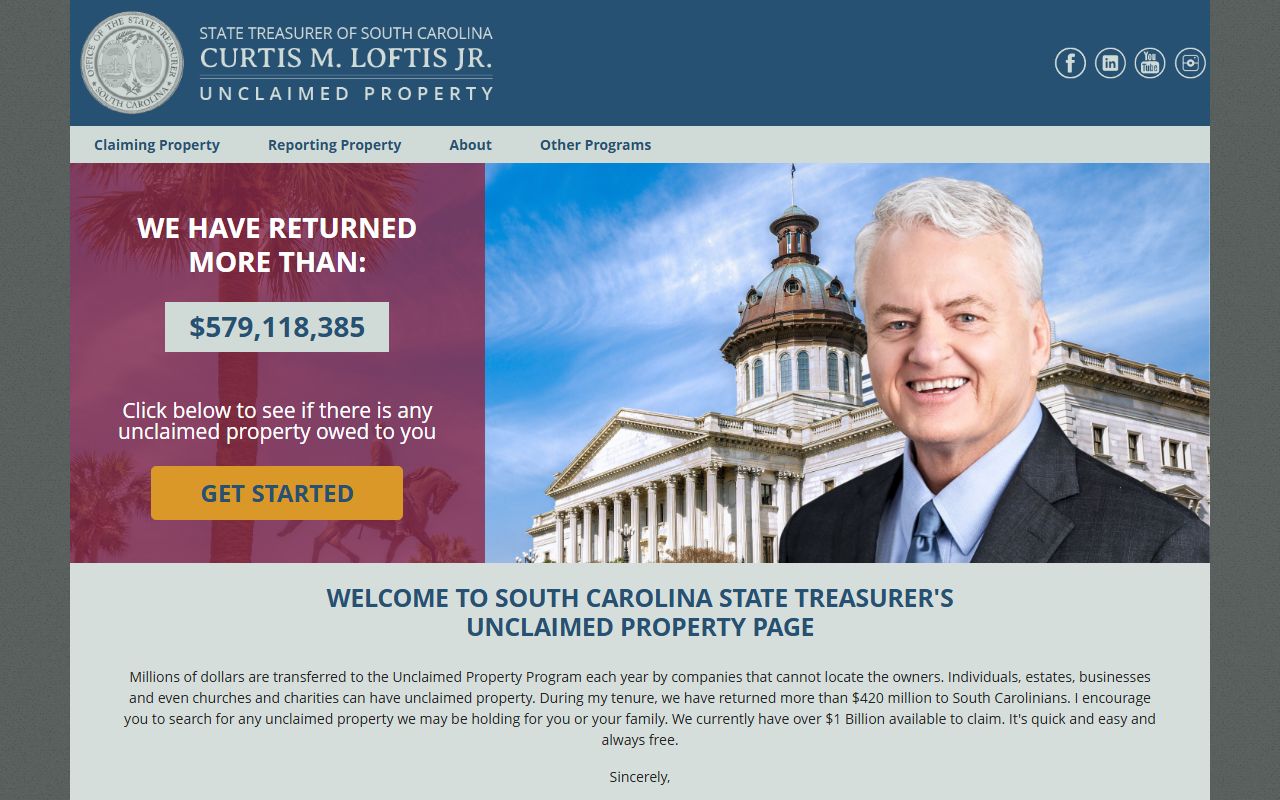
The portal lets you search by first name, last name, or business name, and you can narrow results by city to find the right record faster.
Note: Searching under multiple name variations, including maiden names and business names, increases your chances of finding unclaimed accounts you may not remember.
South Carolina's Unclaimed Property Program
The South Carolina Unclaimed Property Program is administered by the Office of the State Treasurer. Treasurer Curtis Loftis has led the program since taking office in 2011, and under his leadership the state has returned more than $420 million in unclaimed money to rightful owners. That figure exceeds what all prior state treasurers combined returned over the full history of the program. Last year alone, the Treasurer's office returned $36.7 million in unclaimed funds to South Carolinians. In one recent instance, a single South Carolina city received over $1 million in returned unclaimed property.
The program moved from the South Carolina Department of Revenue to the State Treasurer's office in 1996. Since then, the Treasurer has expanded outreach, improved the online portal, and introduced the Palmetto Payback initiative. Palmetto Payback automatically distributes unclaimed funds to qualifying owners without requiring them to file a claim. This means some South Carolinians receive their unclaimed money before they even know to look for it. The program contacts owners directly when sufficient identifying information is available.
The State Treasurer's main page for the program is a useful starting point for understanding how the process works and what types of abandoned property are covered in South Carolina.
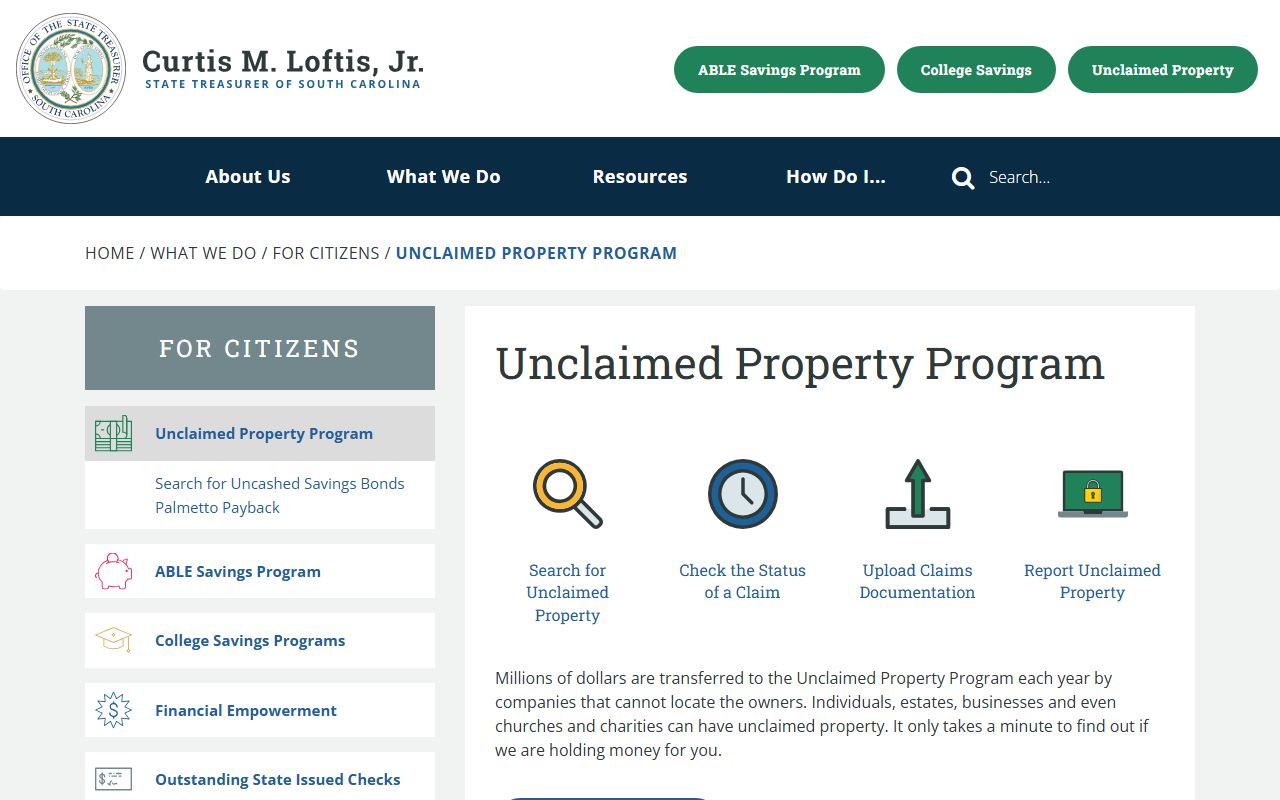
The Treasurer's office can be reached at 803-737-4771 or by email at unclaimed@sto.sc.gov. The office is located at 1200 Senate Street, Suite 214, Wade Hampton Building, Columbia, SC 29201.
What South Carolina Considers Unclaimed Property
South Carolina defines unclaimed property broadly. It covers any intangible financial asset that a holder has not been able to return to the owner after a dormancy period. Intangible property means property that represents a legal right to money rather than a physical object itself. This includes bank account balances, uncashed checks, insurance proceeds, wages, dividends, and many other types of financial assets held by businesses and government entities across the state.
The most common types of unclaimed money in South Carolina include dormant checking and savings accounts, certificates of deposit, uncashed payroll checks, insurance policy proceeds and refunds, security deposits from utilities, stocks and dividends, credit balances from retail accounts, money orders, safe deposit box contents, court-ordered payments, and refunds from businesses. South Carolina also collects unclaimed bail bonds, child support payments held by courts, inmate trust accounts from county jails, and deposits from parks and recreation departments.
The full list of unclaimed property types covered in South Carolina is detailed in the dormancy table maintained by the Treasurer's office.
The dormancy table lists every covered property type and the number of years that must pass before a holder must turn the property over to the state.
Note: Safe deposit box contents, including jewelry, documents, and collectibles, are also turned over to the state and auctioned if unclaimed, with the proceeds held for the owner.
SC Unclaimed Property Dormancy Periods
South Carolina law sets specific dormancy periods for each type of unclaimed property. A dormancy period is the number of years a holder must wait without owner contact before the account is considered abandoned and must be reported to the state. Under South Carolina Code Title 27, Chapter 18, the general dormancy period for most intangible property is five years under Section 27-18-30. Shorter periods apply to certain property types.
Wages and commissions have a one-year dormancy period under Section 27-18-160. Utility deposits also become reportable after one year without owner contact under Section 27-18-90. Insurance proceeds carry a three-year dormancy period. Securities and stocks are reportable after three years as well. Money orders must be reported after seven years under Section 27-18-50. Travelers checks have the longest dormancy period at fifteen years under the same section. Safe deposit box contents, credit memos, and fiduciary property all follow a five-year dormancy rule.
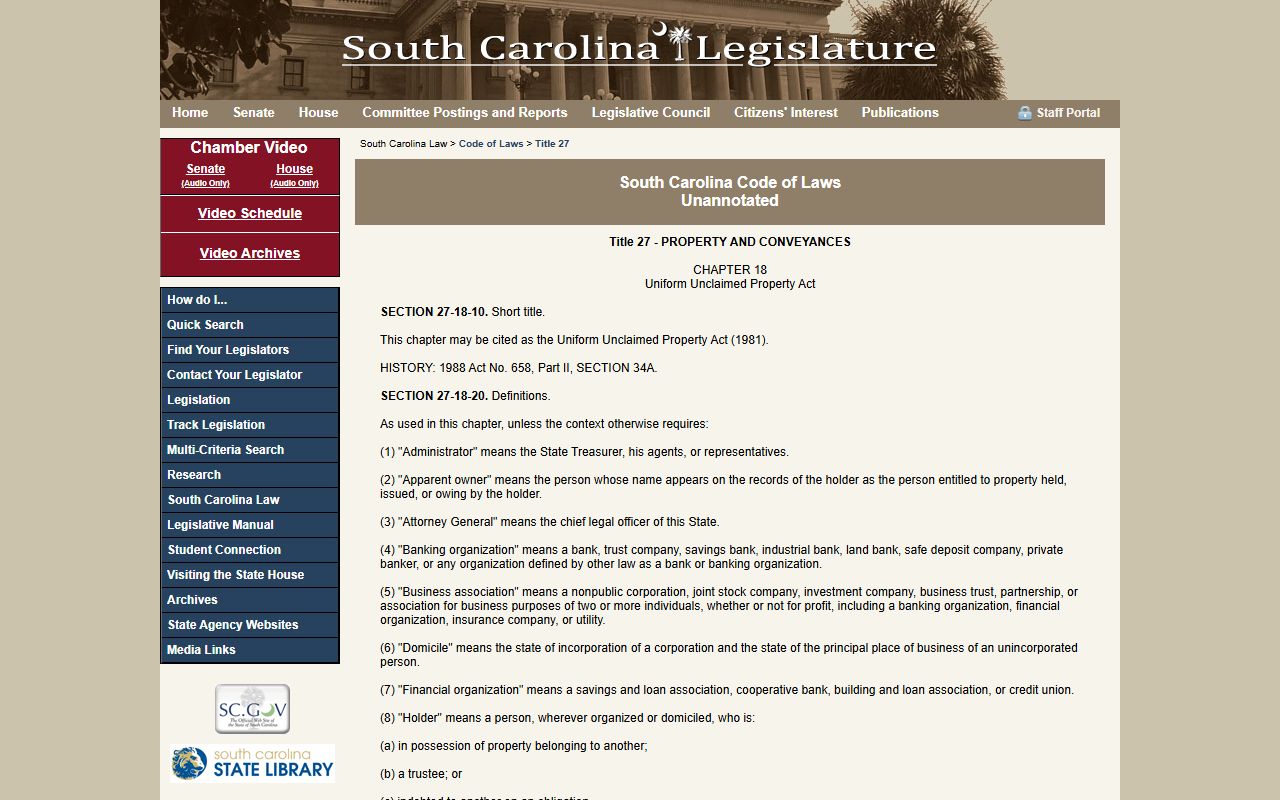
The SC statehouse code page covers all dormancy rules that apply to unclaimed funds in South Carolina.
Holders must also send written notice to apparent owners within 120 days before filing their annual report, but only for accounts valued at $50 or more. This due diligence requirement gives owners a chance to reclaim their property before it is turned over to the state. Records related to reportable property must be kept for ten years after the property becomes reportable in South Carolina.
Who Reports Unclaimed Money in South Carolina
Any person or organization holding property that belongs to someone else can be a holder under South Carolina law. Holders include banks, credit unions, brokerage firms, insurance companies, utilities, retailers, landlords, employers, hospitals, nonprofit organizations, and government entities at all levels. Even charities and estates can be holders if they are holding unclaimed funds belonging to another party. All holders, whether for-profit or nonprofit, are subject to the same reporting rules in South Carolina.
Government entities are a significant source of unclaimed property in South Carolina. The Municipal Association of South Carolina has published guidance for local governments explaining what types of funds must be reported. Cities and towns must report unclaimed water and sewer deposits, uncashed payroll checks, court-held funds such as bail bonds and child support, inmate accounts from local jails, parks and recreation deposits, and other credit balances from accounts payable. All cities must file an annual report and remit unclaimed funds by November 1 each year.
All holder reports must be submitted electronically in NAUPA format. Paper reports are not accepted in South Carolina. Holders must also file even if they have no unclaimed property to report. This negative reporting requirement ensures the state has a complete picture of which holders are in compliance each year.
Note: Annual holder reports are due by November 1 and must cover property that became reportable as of the preceding June 30.
How to Claim Unclaimed Money in South Carolina
Claiming unclaimed money in South Carolina is a straightforward process. Start by searching the portal at southcarolina.findyourunclaimedproperty.com. When you find a record that matches you, click to start the claim online. The portal walks you through the steps and tells you exactly which documents to upload. You receive a Claim ID when you submit, and you can use that ID to check your claim status at any time.
The documents required depend on the type of unclaimed property and the amount. For most individual claims, you will need a government-issued photo ID, proof of your current address, and documentation linking you to the property such as a bank statement, insurance policy, or pay stub. Claims on behalf of a deceased person require additional documents. You will need a certified death certificate and letters of administration or testamentary showing that you are authorized to act on behalf of the estate. The Treasurer's FAQ page explains what is needed for each type of claim.
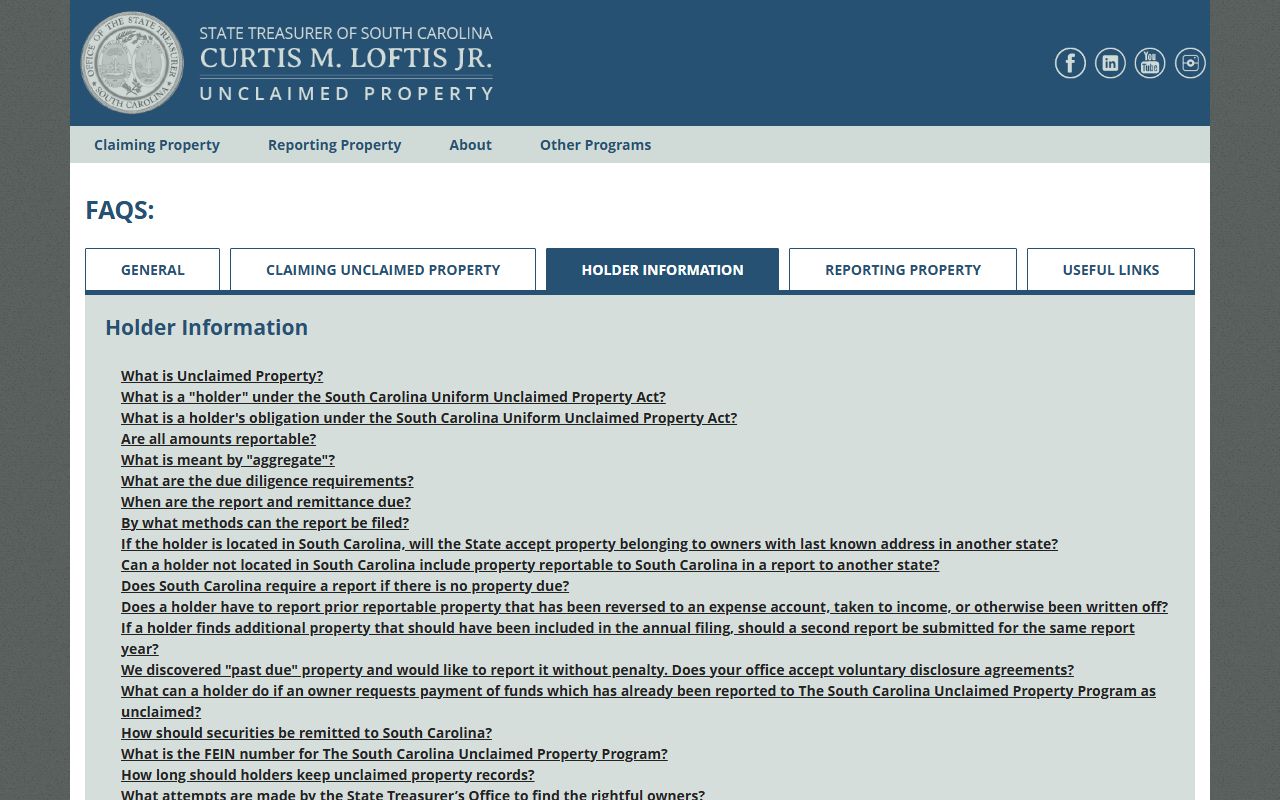
The FAQ page covers common questions about what documents are needed, how long claims take, and what happens to unclaimed funds that are never claimed.
Federal Court Unclaimed Funds in South Carolina
The U.S. Bankruptcy Court for the District of South Carolina holds a separate pool of unclaimed funds. These are funds from bankruptcy cases where checks issued to creditors or debtors were never cashed. Under 11 U.S.C. Section 347, a bankruptcy trustee deposits these uncashed checks with the court when closing a case. The court holds the money and makes it available to claimants who can prove their right to the funds.
To claim federal bankruptcy court unclaimed funds in South Carolina, you must file an Application for Payment using Director's Form 1340. Contact the clerk's office at 803-765-5436 for details on how to submit the application and what supporting documents you will need. These federal unclaimed funds are separate from the state program and must be claimed directly through the court.
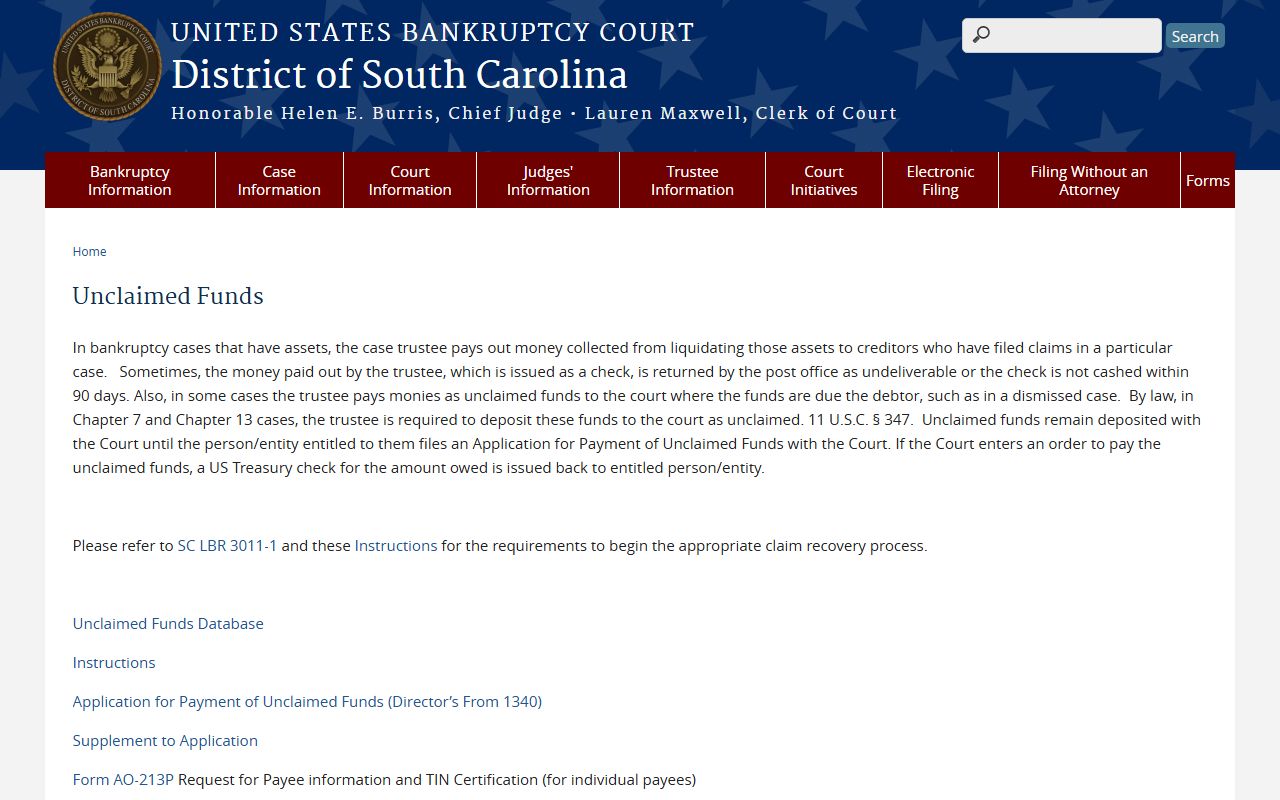
The court's unclaimed funds page lists current balances available for claim and explains the application process for recovering money from closed bankruptcy cases in South Carolina.
Note: Federal court unclaimed funds are not connected to the state Treasurer's database, so you must search both sources to be thorough.
South Carolina Law on Unclaimed Property
South Carolina's unclaimed property law is found in Title 27, Chapter 18 of the South Carolina Code of Laws, which adopts the Uniform Unclaimed Property Act. This law, enacted in 1981, governs how holders must manage dormant property, when they must report to the state, and how owners can recover their funds. The law applies to all holders doing business in South Carolina, regardless of where the holder is incorporated.
Section 27-18-180 governs the reporting requirements for holders. It sets out what information must be included in annual reports, the format for submission, and the deadlines that apply. The Justia Law website provides a readable version of this section for those who want to review the full text of the reporting rules.
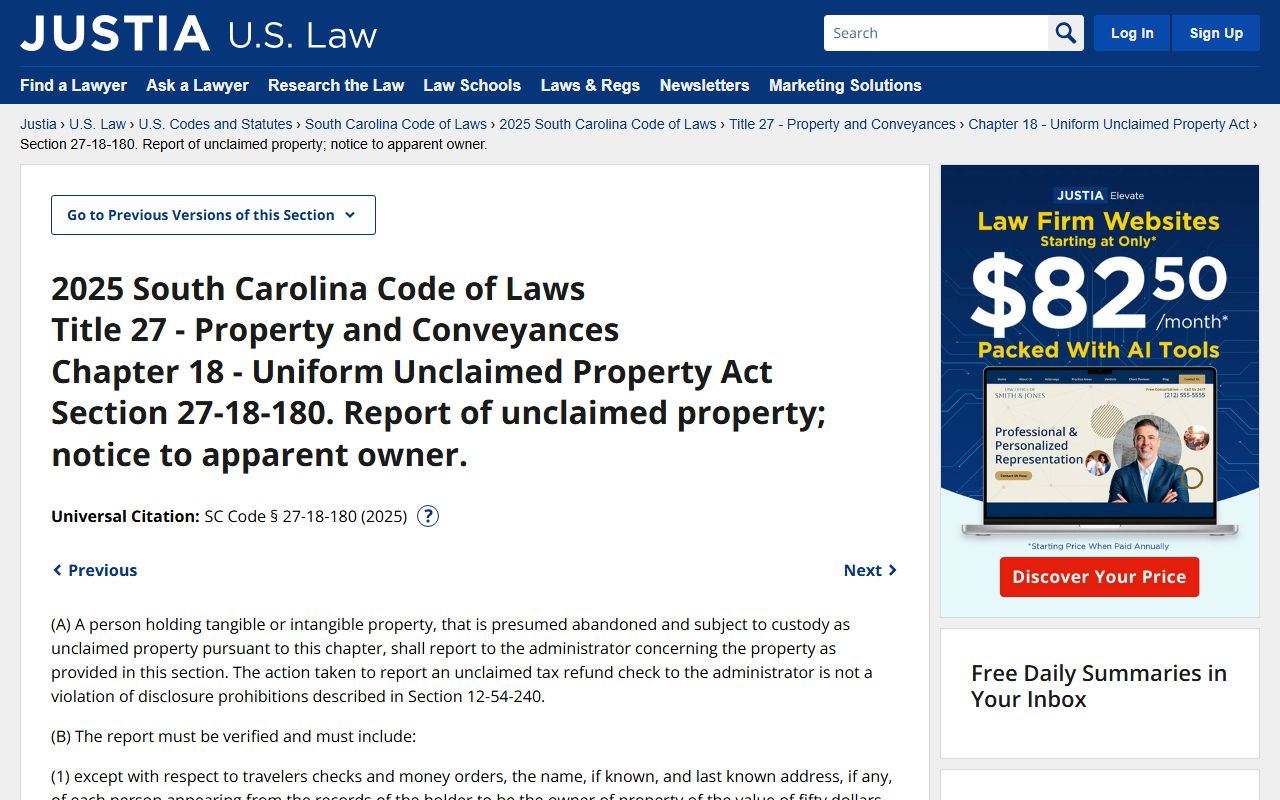
The Justia page makes it easy to read the statute text and understand what holders are required to do under South Carolina law before turning over abandoned property to the state.
South Carolina also has separate rules for county-held unclaimed funds under Title 4, Chapter 11 of the state code. This chapter governs how county governments manage and report unclaimed funds they hold, separate from the general unclaimed property program run by the State Treasurer.
County Unclaimed Money Searches in South Carolina
Some South Carolina counties maintain their own unclaimed funds databases in addition to the statewide program. Greenville County, for example, operates a dedicated unclaimed checks search at greenvillecounty.org. Residents of Greenville County can search for checks issued by the county that were never cashed. This database is separate from the state portal and may contain funds not listed there.
County treasurers across South Carolina also hold unclaimed funds from local government operations. If you are searching for money from a specific county government, contact the county treasurer's office directly. The South Carolina Association of Counties is a useful resource for finding contact information for county offices throughout the state.
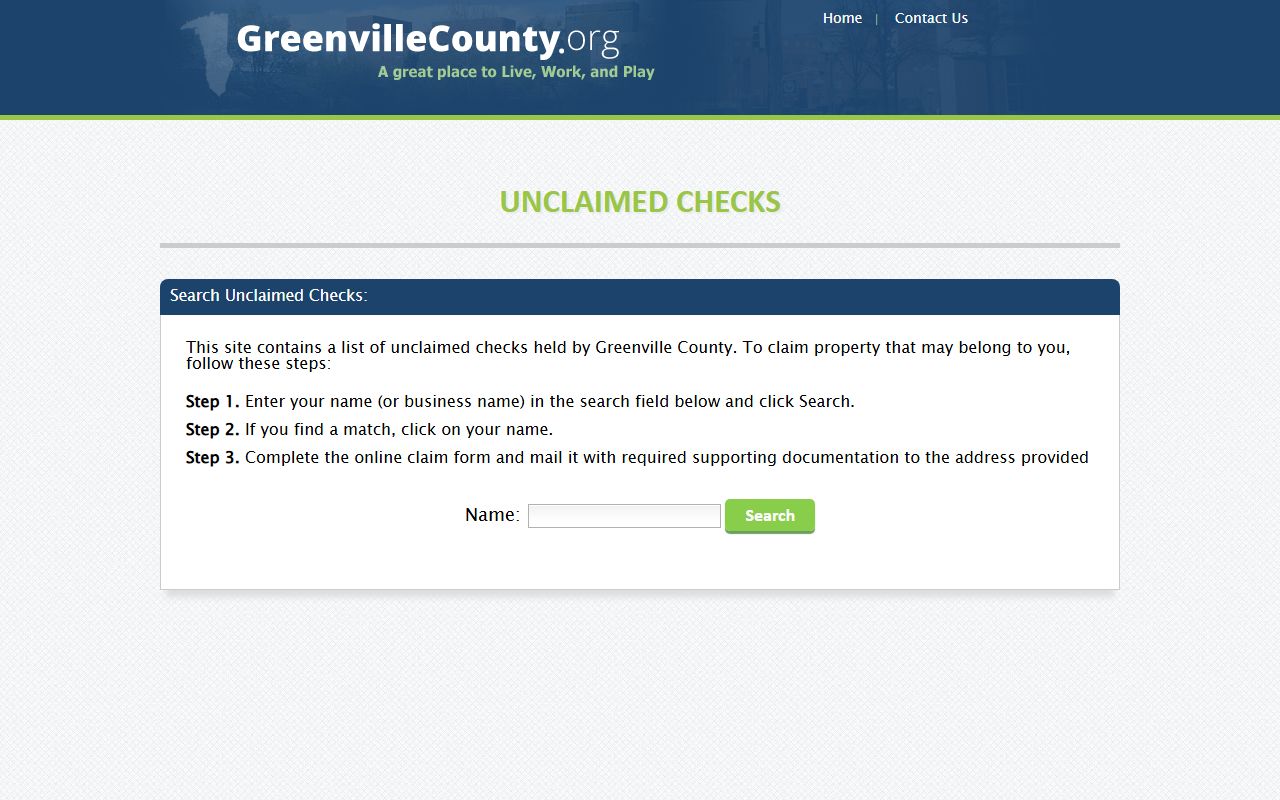
Greenville County's unclaimed checks portal allows residents to search by name for county-issued checks that were returned or never negotiated.

The South Carolina Association of Counties website provides contact information for all 46 county governments and links to county offices where unclaimed funds may be held.
Note: Always search both the state portal and any county-specific database to make sure you are not missing unclaimed funds held at the local level.
South Carolina Municipal Unclaimed Property Reporting
Cities and towns in South Carolina are holders under the same unclaimed property law that applies to businesses. The Municipal Association of South Carolina has issued guidance to help local governments understand their reporting obligations. Municipal entities must identify unclaimed property from a wide range of sources, including court-held funds, utility deposits, payroll accounts, and inmate trust accounts. Failing to report is a violation of state law and can result in penalties.
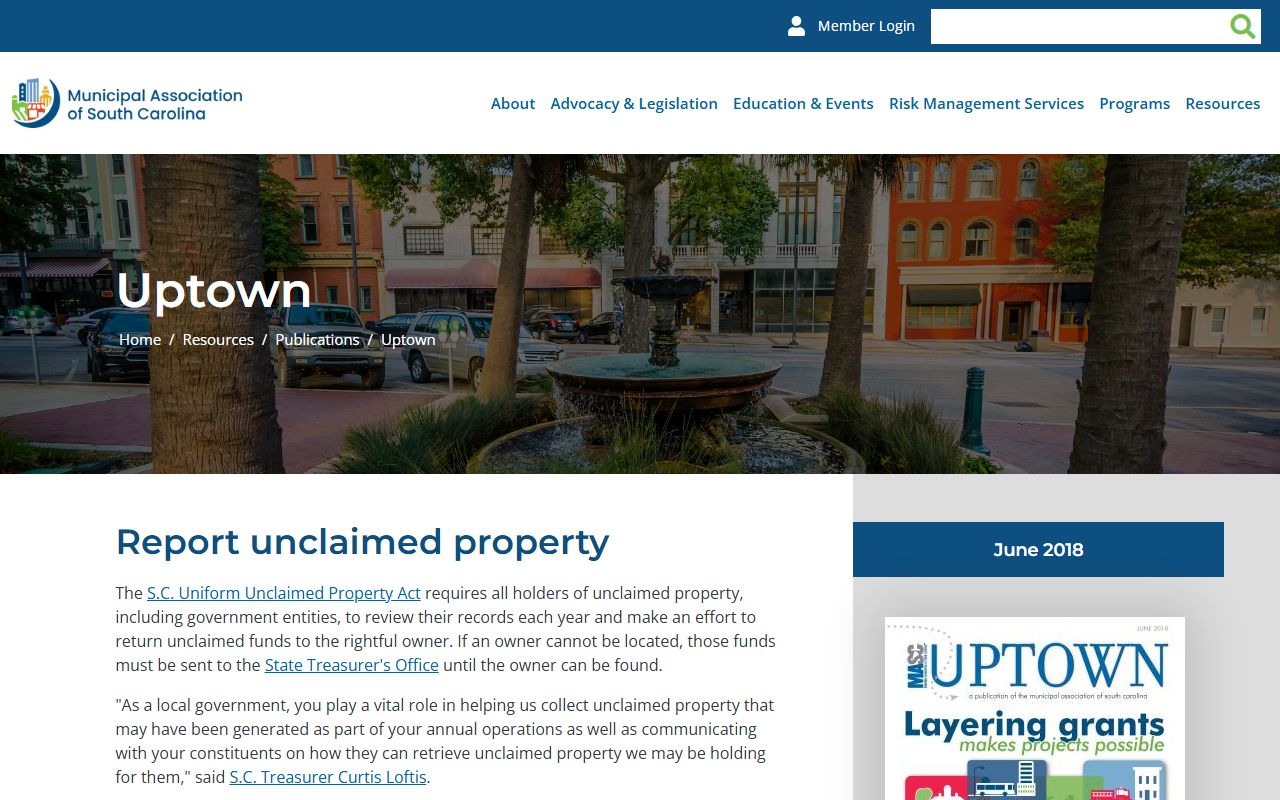
The Municipal Association's guide explains which types of funds must be reported, how to prepare the annual report, and what the November 1 deadline requires of South Carolina cities and towns.
Browse South Carolina Unclaimed Money by County
Unclaimed property in South Carolina can be tied to the county where you lived, worked, or held accounts. Pick a county below to find local resources for unclaimed funds in that area.
Unclaimed Funds in South Carolina Cities
Residents of major South Carolina cities can search the statewide portal for unclaimed property tied to their city. Pick a city below to find local unclaimed money resources.