
Union County South Carolina Unclaimed Money
Union County is located in the Piedmont region of South Carolina, between the larger metro areas of Spartanburg and Charlotte. The county includes the city of Union, as well as Jonesville and Lockhart. Like every county in the state, Union County has residents with unclaimed property sitting in the state's free database. Old bank accounts, uncashed payroll checks, forgotten insurance payments, and dormant utility deposits are all tracked by the South Carolina State Treasurer. This page walks through where to search and what to expect when you file a claim.
Union County Quick Facts
State Unclaimed Property Search for Union County
The South Carolina state unclaimed property portal is the primary tool for Union County residents. It is free, easy to use, and available at southcarolina.findyourunclaimedproperty.com. Enter your name and review any results that come up. The database includes property from banks, insurance companies, utilities, credit unions, and other businesses that held funds with a last known address in South Carolina. Union County residents past and present should run this search regularly.
State Treasurer Curtis Loftis runs the South Carolina unclaimed property program. His office has returned more than $420 million to residents statewide since he took office. Last year, $36.7 million was paid out to claimants. South Carolina currently holds more than one billion dollars in unclaimed property on behalf of residents who have not yet come forward. Union County's share of those funds belongs to residents of the city of Union, Jonesville, Lockhart, and the surrounding rural areas.
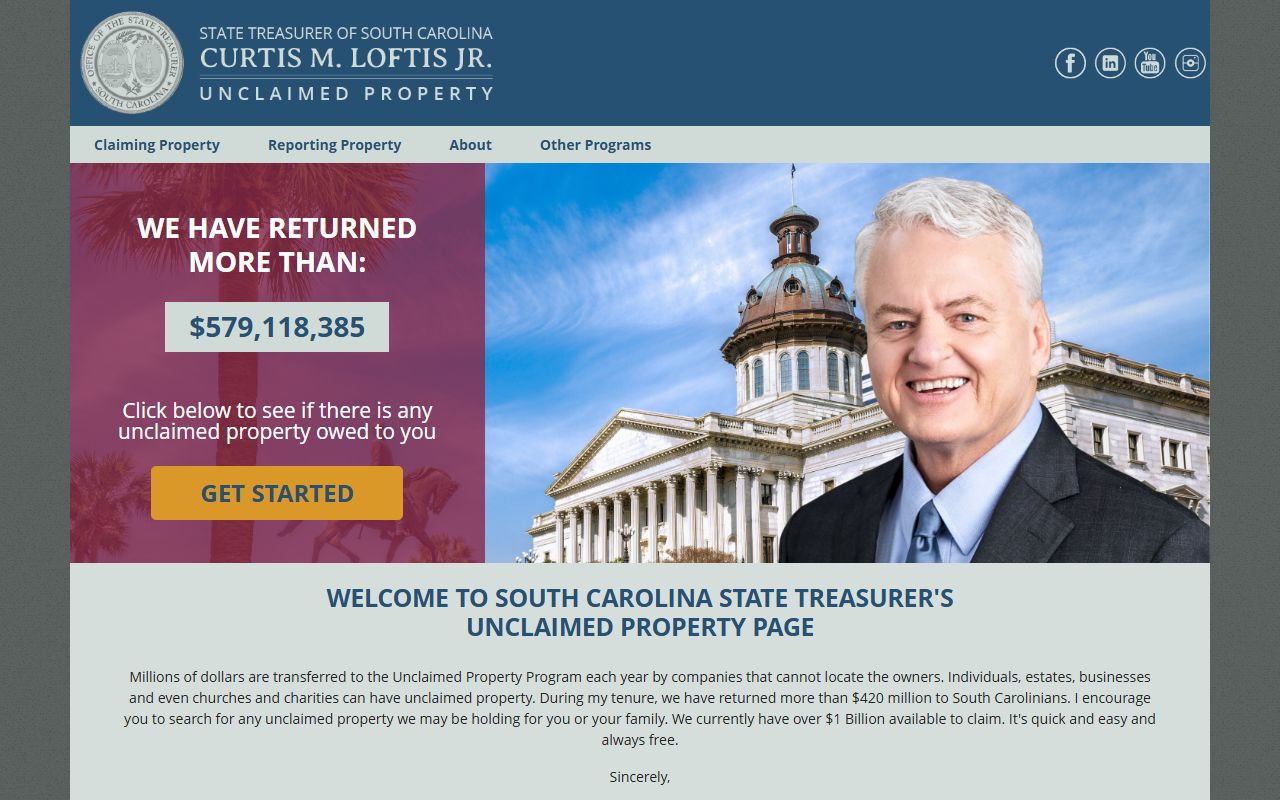
The screenshot below comes from the South Carolina unclaimed property search portal, which serves as the primary database for anyone searching for abandoned funds tied to a South Carolina address, including Union County residents.
The search is free. No account creation is needed to search, and no fee is ever charged to file a claim or receive payment.
Note: You can search under any name you have used, including maiden names, former legal names, and business names associated with Union County addresses.
Union County Textile History and Unclaimed Wages
Union County has a long textile manufacturing history. Mills in Union, Jonesville, and Lockhart employed thousands of workers for much of the twentieth century. When mills closed, workers were sometimes owed final paychecks or benefit payments that were never collected. These wages, if reported to the state, are now in the unclaimed property database. Anyone who worked in Union County's textile industry decades ago, or whose family members did, should search the state database with those names.
Unclaimed wages have a shorter dormancy period than most other types of property. Under South Carolina law, payroll checks go dormant after just one year of sitting uncollected. That means a final paycheck from any employer in Union County that was never cashed would have been reported to the state within a year. If it has been in the state database for decades, it is still there and still available for the rightful owner to claim.
Former mill employees or their heirs should also check for unclaimed pension benefits. Some pension plans connected to closed textile operations have been absorbed by the federal Pension Benefit Guaranty Corporation. Their database at pbgc.gov is a separate search from the state program but is equally worth checking.
How to File a Union County Unclaimed Property Claim
Finding your name in the state database is the first step. Once you see a match, you click through to the claim form and provide information verifying your identity. Most personal property claims require a copy of a government-issued ID and proof that you had the address listed in the record. A past utility bill, a lease, or a prior tax return listing that address can all work as proof.
For claims on behalf of a deceased relative, you will also need documentation showing your legal authority to collect on their behalf. This typically includes a death certificate and a copy of any estate documents showing you as executor or heir. The State Treasurer's office reviews all claims and will contact you if additional documents are needed. Payment is issued after the claim is verified. For questions, call 803-737-4771.
There is no time limit on claiming unclaimed property in South Carolina. Funds are held indefinitely until claimed. Even if an account went dormant twenty or thirty years ago, the money is still available for the rightful owner or their heirs to collect.
Note: Claims filed online through the state portal are typically processed faster than paper claims submitted by mail.
Dormancy Periods and South Carolina Reporting Law
South Carolina's unclaimed property law is contained in SC Code Title 27, Chapter 18. This law governs every business and financial institution in the state. The general dormancy period for most financial property is five years. Wages are reportable after one year. Utility deposits also carry the one-year rule. Money orders are held for seven years. Traveler's checks require fifteen years before being reported. Securities go dormant after three years with no owner activity. The full table of dormancy periods is at the state dormancy table.
All holders must report to the state by November 1 each year. Before reporting, they must spend 120 days trying to reach the owner at the last known address. This requirement comes from Section 27-18-180. If you receive a due diligence letter from a bank or other company asking you to respond about an account, treat it seriously. Failing to respond means your funds will move to the state.
SC Association of Counties and Local Resources
The SC Association of Counties provides guidance and support to county governments across South Carolina, including Union County. While the Association does not operate a separate unclaimed property database, it works to ensure county governments follow proper procedures for reporting dormant funds to the state. County-issued checks and financial disbursements that go uncollected are ultimately tracked through the state program.
Union County residents can also find information about county government financial services through local offices. For court-related funds that may have gone uncollected in Union County, contact the Clerk of Court for more information. Civil settlements and estate distributions handled through the court system can sometimes result in unclaimed funds that eventually transfer to the state database.
South Carolina Dormancy Table and Property Types
Knowing what types of property become unclaimed and when can help Union County residents identify what to look for when they search. The state maintains a detailed dormancy table that lists every category of reportable property alongside its dormancy period. Reviewing this table before searching can help you recall accounts or payments you may have forgotten.
The image below comes from the South Carolina state dormancy table page. It shows the schedule of dormancy periods that apply to all types of unclaimed property held for South Carolina residents, including those in Union County.
Reviewing the dormancy schedule can help you think back to accounts or payments you may not have thought about in years. Small accounts and one-time payments are the most commonly overlooked sources of unclaimed property.
Note: Even a small account worth ten or twenty dollars is worth claiming. The state holds all amounts regardless of size until the rightful owner comes forward.
Cities in Union County
Union County includes the city of Union, as well as Jonesville and Lockhart. All residents, current and former, should search the state database for unclaimed funds connected to their Union County addresses.
To search by address history, visit southcarolina.findyourunclaimedproperty.com and search by name. The system will show all matches tied to your South Carolina records.
Nearby Counties
Union County shares borders with several Upstate and Midlands counties. Residents who have lived or worked in those areas should search those county records as well.