
Charleston Unclaimed Money Search
Charleston residents have more unclaimed money waiting than most people realize. The South Carolina State Treasurer holds funds for residents of Charleston who have lost touch with old bank accounts, insurance payouts, utility deposits, and other financial assets. Charleston is one of the largest cities in South Carolina, with roughly 150,000 residents and a busy port economy that generates a high volume of unclaimed property each year. This page explains how to search the state database, what kinds of property get reported, and what steps to take if you find a match.
Charleston Quick Facts
How to Search Charleston Unclaimed Property
The main tool for searching Charleston unclaimed money is the state database run by the South Carolina State Treasurer. You reach it at southcarolina.findyourunclaimedproperty.com. Enter "Charleston" as your city and your last name. The system searches all reported property held for people with that city on file. Results appear quickly and show the name of the holder, the type of property, and the amount if it is over a certain threshold.
Try different name variations when you search. Use your full legal name first. Then try maiden names, previous names, and common misspellings. Charleston has a large transient population tied to the tourism and hospitality industry, so many people have moved in or out over the years. If you changed your name at any point, search under all versions. Former Charleston residents who moved away may still have property listed under a Charleston address.
The state search is free. There is no charge to look up property or to file a claim. Be cautious of third-party companies that charge fees to search or file on your behalf. The state database gives you direct access to the same records those companies use.
Note: The state database is updated regularly, so check back if you do not find anything on your first search.
Charleston Property Types Most Often Reported
Banks and credit unions report dormant accounts as unclaimed property after the account sits idle for a set period. For standard checking and savings accounts, the dormancy period is five years. Charleston has dozens of banks and credit unions operating in the city. Old accounts from closed branches, merged institutions, and forgotten CDs are among the most common types reported for Charleston residents.
Insurance companies report unclaimed money when policyholders or beneficiaries fail to collect. Life insurance proceeds, annuity payments, and premium refunds all end up in the state fund. Charleston's population includes a large number of retirees and long-term residents, which means life insurance claims are a significant source of unclaimed funds in this city. If a relative who lived in Charleston passed away, search for their name in the database.
Utility companies, landlords, and government agencies also report funds. Security deposits from rental properties, overpaid utility bills, and refund checks that went uncashed are all examples. The port and shipping industries that operate in Charleston generate business accounts and vendor payments that sometimes go uncollected as well.
Note: Wages go dormant after just one year, so check the database if you worked for a Charleston employer and did not receive a final paycheck.
Charleston City Government and Unclaimed Funds
The City of Charleston operates from its offices at 80 Broad Street, Charleston, SC 29401. City government payments, vendor refunds, and utility deposits from city services can end up as unclaimed property in the state fund. Residents who overpaid city fees or never collected a refund from a city account should search the state database using their name and "Charleston" as the city.
The city website at charleston-sc.gov provides information about city services and accounts. For city-specific refunds or payments, contact the Finance Department directly. Most unclaimed amounts from city sources get transferred to the state fund after the required dormancy period and then appear in the state search tool.
The photo below is sourced from the City of Charleston's official website, showing city government resources available to residents.
Charleston city offices process refunds and vendor payments that may eventually be reported to the state as unclaimed property if not collected.
Palmetto Payback and Charleston Residents
South Carolina runs a program called Palmetto Payback that proactively returns unclaimed money to residents who qualify. Under this program, the state identifies property owners and sends funds directly rather than waiting for a claim. Charleston residents have benefited from this initiative. News reports have named local residents like Margaret Rudolph as people who received payments through the program.
The Palmetto Payback program focuses on smaller amounts where the cost of processing a traditional claim would outweigh the benefit. The state Treasurer's office works to match property to current addresses and mails checks directly. If you live in Charleston and have not searched recently, it is worth checking even if you think you have no old accounts or forgotten funds.
The image below comes from the state treasurer's unclaimed property search portal at southcarolina.findyourunclaimedproperty.com, which Charleston residents use to find and claim funds.
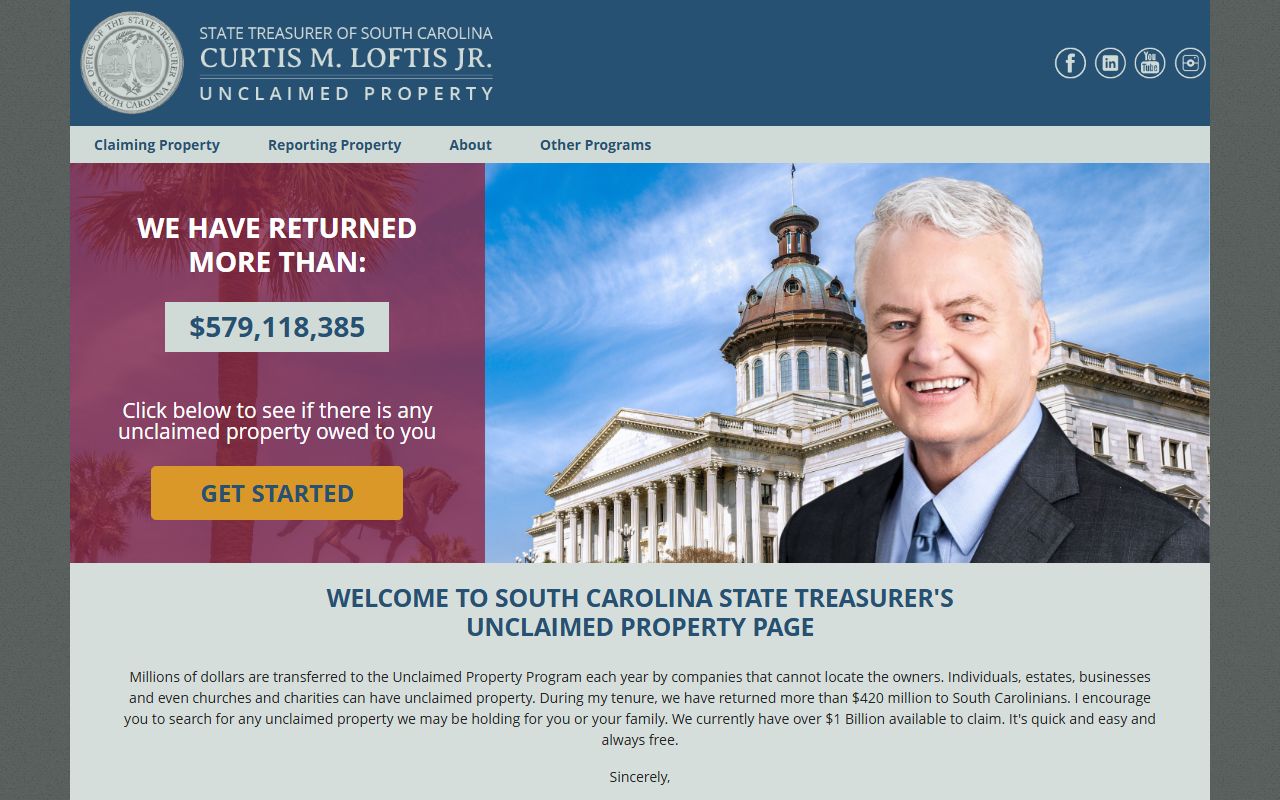
The state search portal is the primary tool for Charleston residents to find unclaimed property reported under their name or address.
How to File a Charleston Unclaimed Money Claim
Filing a claim is straightforward. Start at the state search portal and locate the property with your name. Each result has a "Claim" button or link. Click it to begin the online claim process. You will enter your contact information and explain your connection to the property.
The state requires proof of identity. For most claims, a copy of your government-issued ID is enough. For larger amounts or for estate claims, the state may ask for additional documents. These can include death certificates, letters testamentary, or trust documents. The instructions for each claim type are listed on the claim form. You can also call the Treasurer's office at 803-737-4771 or email unclaimed@sto.sc.gov with questions.
Processing times vary. Simple claims with clear documentation tend to close in a few weeks. Complex cases involving estates or disputed ownership can take longer. The state keeps you informed by email as your claim moves through review. There is no cost to file, and the state does not deduct fees from the amount paid out.
Charleston County Treasurer and Local Resources
Charleston County Treasurer Dominic Disandro manages county-level tax collection and related financial services for Charleston residents. The County Treasurer's office at charlestoncounty.org handles property tax accounts and refunds. Overpaid taxes or uncollected refund checks from the county may end up reported to the state as unclaimed property.
If you believe you are owed a refund from Charleston County, contact the Treasurer's office before going through the state claim process. The county can often resolve those issues directly. For property already transferred to the state, use the state search portal to file your claim.
The US Bankruptcy Court for South Carolina also holds unclaimed funds from bankruptcy cases. If you had a creditor claim or settlement in a federal bankruptcy case, check the court's unclaimed funds list at scb.uscourts.gov or call 803-765-5436 for assistance.
Note: Searching both the state database and the county treasurer's office gives you the most complete picture of any refunds or unclaimed amounts owed to you in Charleston.
Charleston County Unclaimed Money
Charleston city residents are served by Charleston County for most county-level financial matters. The county page covers the full scope of unclaimed property resources, dormancy rules, and holder reporting requirements that affect both city and county residents. If you want more details on the county program or resources beyond city limits, the Charleston County page has that information.
Nearby South Carolina Cities
Residents in cities near Charleston can use the same state search tool. Each city page below has local details and tips for searching unclaimed property in that area.