
Charleston County Unclaimed Money and Abandoned Property
Charleston County holds more unclaimed property than almost any other county in South Carolina. The county's large population, active port economy, and thriving tourism industry create thousands of unclaimed accounts each year. Banks, insurance companies, port businesses, and financial services firms all report unclaimed funds to the South Carolina State Treasurer. If you live or have lived in Charleston, North Charleston, Mount Pleasant, or Summerville, it is worth taking a few minutes to search the free state database.
Charleston County Quick Facts
Why Charleston County Has High Unclaimed Funds
Charleston County is South Carolina's most populous and economically active coastal county. The port of Charleston is one of the busiest on the East Coast, supporting thousands of businesses and workers. That level of economic activity generates a large volume of financial transactions. When people change jobs, move, or simply lose track of accounts, funds go dormant and eventually transfer to the state.
Tourism adds to the mix. Hotels, restaurants, and hospitality businesses pay wages that sometimes go uncollected. Seasonal workers and transient employees are especially likely to leave behind uncashed checks or forgotten accounts. Charleston's growth also means many people have moved in from other states, sometimes leaving old accounts behind when they arrived.
Financial services firms headquartered in or operating from Charleston report unclaimed accounts from clients across the state and beyond. Insurance companies operating along the coast report policy proceeds. All of that flows into the South Carolina unclaimed property fund, which held over $1 billion statewide at last count. State Treasurer Curtis Loftis has returned more than $420 million to rightful owners over his tenure, and $36.7 million was returned in the most recent year.
Charleston County Treasurer Unclaimed Property
Charleston County Treasurer Dominic Disandro manages the county's financial operations, including property tax collection. Overpaid taxes, voided refund checks, and other county-level financial transactions can result in unclaimed funds. These records sit at the county level and may not appear in the state's online database.
The image below comes from the Charleston County Treasurer's official website at charlestoncounty.org.
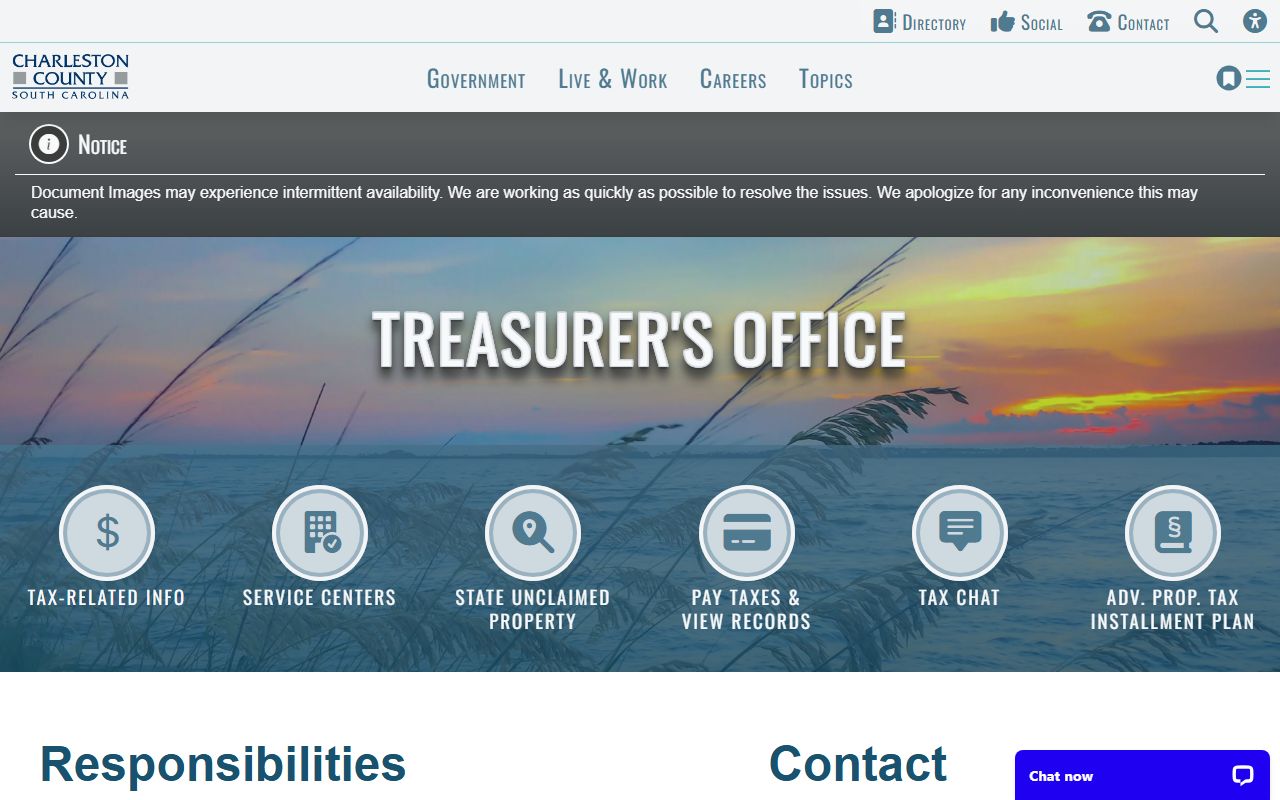
If you believe you are owed a tax refund or other payment from Charleston County, contact the treasurer's office directly. Their information and online resources are available at charlestoncounty.org/departments/treasurer. The main Charleston County website at charlestoncounty.org also lists all county departments and contact information.
Note: County-held funds and state-held unclaimed property are two separate pools. Check both sources to make sure you have not missed anything.
Searching for Charleston County Unclaimed Money Online
The South Carolina State Treasurer runs the official unclaimed property search at southcarolina.findyourunclaimedproperty.com. The tool is free, updated daily, and covers all property types. Enter your name and a city to start. For Charleston County, try each city where you have lived: Charleston, North Charleston, Mount Pleasant, James Island, Johns Island, West Ashley, and Summerville.
Search your current legal name, any maiden names, and any former legal names. If you have been in business in Charleston County, search your business name as well. Corporations and LLCs can have unclaimed property in the same way individuals do. Searching broadly ensures you do not miss anything.
Results show the property type, the original holder, and the reported amount when available. Some records show "unknown" for amount until the claim is submitted. Do not skip these. A record with an unknown amount could represent a substantial balance from an old investment account or insurance policy.
US District Court Bankruptcy Unclaimed Funds in Charleston
The US District Court's Charleston Division handles bankruptcy cases for the coastal region of South Carolina. When a bankruptcy case is closed and funds remain unclaimed by creditors or debtors, those funds are held by the court. The process for claiming these funds is separate from the state unclaimed property program.
The image below comes from the US Bankruptcy Court for the District of South Carolina, which handles unclaimed bankruptcy funds for the Charleston region at scb.uscourts.gov.
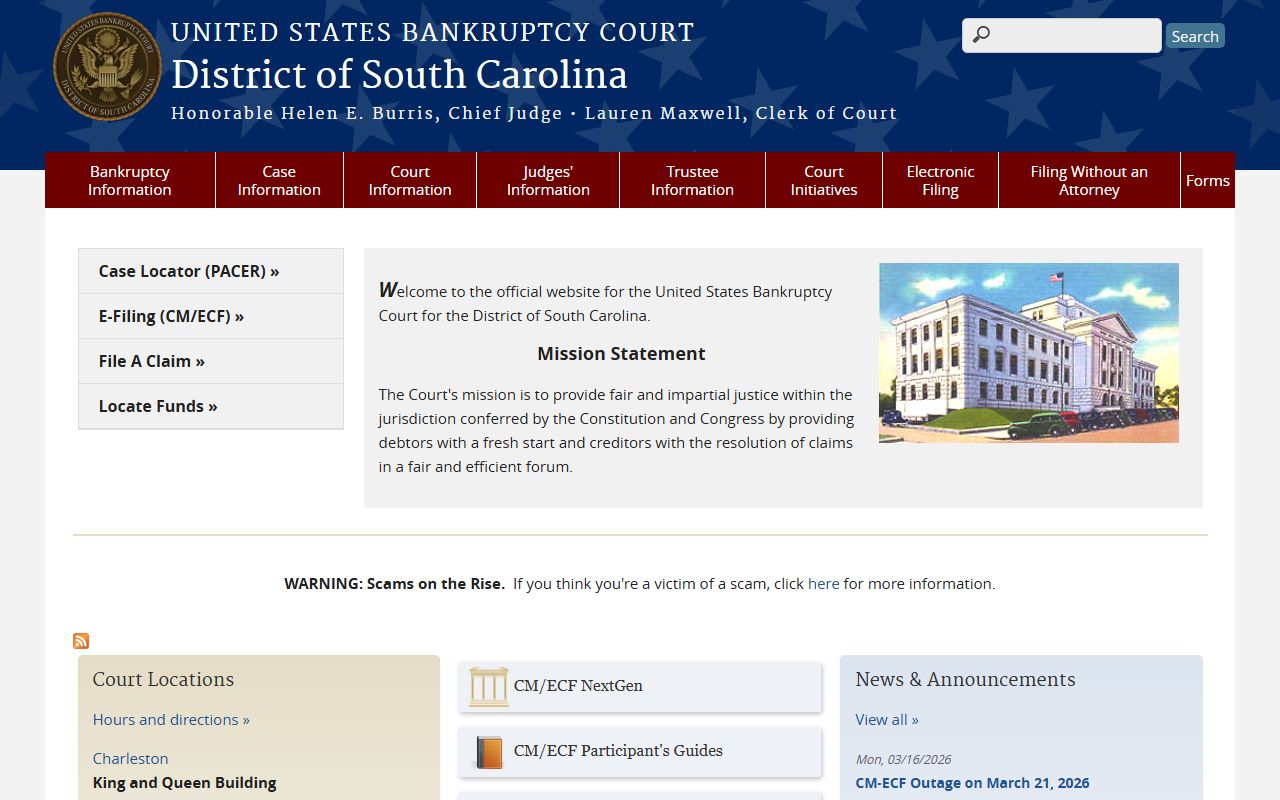
To apply for unclaimed bankruptcy funds, you must file Director's Form 1340 with the court. Contact the Charleston Division at 803-765-5436 for guidance. Bankruptcy unclaimed funds can sit for years before a creditor or former debtor realizes the money is there. If you were a party to a bankruptcy case in Charleston, check with the court to see if any distributions were unclaimed.
Note: Bankruptcy unclaimed funds are governed by federal court procedures and are distinct from the South Carolina state unclaimed property program.
Charleston County Clerk of Court and Unclaimed Money
The Charleston County Clerk of Court handles civil case filings, court fees, and various financial transactions that can result in unclaimed funds. Overpaid court costs, returned bond money, and unclaimed civil judgment proceeds are among the types of funds that may accumulate.
The image below comes from the Charleston County Clerk of Court's official website at charlestoncounty.org.
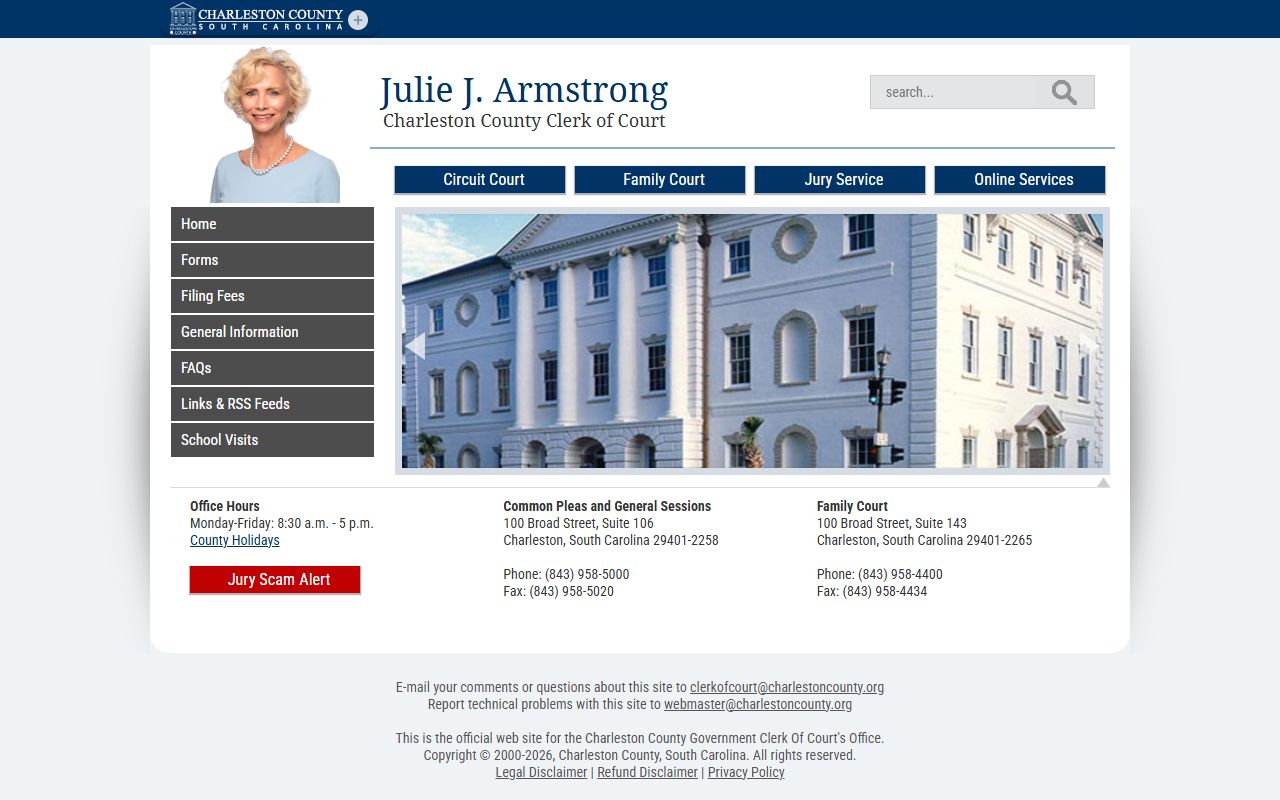
If you were involved in a civil case or paid court costs in Charleston County and believe you may be owed a refund, contact the Clerk of Court's office directly. Their website at charlestoncounty.org/departments/clerk-of-court has contact information and filing details. The clerk's office covers all court-related records and financial transactions for the county.
How to Claim Charleston County Unclaimed Accounts
Once you find a record in your name at the state search portal, the next step is filing a claim. Click "Claim This Property" on the result page. The state will ask you to verify your identity. For most claims, a valid government-issued photo ID and documentation of your address history are enough to start the process.
Claims for higher-value property may require additional verification. The Treasurer's office may ask for original documents rather than copies for large claims. Estate claims require proof of your authority to act for the estate, such as letters testamentary. The FAQs at southcarolina.findyourunclaimedproperty.com answer the most common questions about the process.
Reach the SC State Treasurer's Unclaimed Property Program at 803-737-4771 or unclaimed@sto.sc.gov. Their full program details are at treasurer.sc.gov. The service is free. You never pay a percentage of what you recover through the official state program.
South Carolina Unclaimed Property Law and Reporting
South Carolina's unclaimed property program is governed by Title 27, Chapter 18 of the SC Code of Laws, available at scstatehouse.gov. Businesses and financial institutions in Charleston County must follow these rules when reporting unclaimed property. Holders have a November 1 annual deadline to file their reports with the state.
Before reporting property worth $50 or more, holders must make a due diligence effort to find the owner. Under Section 27-18-180, this means sending written notice to the owner's last known address at least 120 days before the November 1 deadline. If you receive such a notice, act quickly. Once the property transfers to the state, claiming it takes more steps than simply responding to the notice.
The SC Association of Counties at sccounties.org provides guidance for county governments on their own unclaimed property obligations. The Municipal Association of SC has also published guidance for local governments at masc.sc. These resources ensure that Charleston County municipalities are properly handling public funds.
Cities in Charleston County
Charleston County includes several large cities and communities. Search each city name where you have lived to maximize your chances of finding unclaimed money in Charleston County.
Nearby Counties
Charleston County is bordered by several counties in the Lowcountry and coastal regions of South Carolina. Residents near county lines may have unclaimed property in more than one county's records.