
Beaufort County Unclaimed Money and Abandoned Accounts
Beaufort County is one of South Carolina's fastest-growing coastal communities, and it also has a significant amount of unclaimed money held by the state. Uncashed checks are the most common type of unclaimed property from Beaufort County entities, but abandoned bank accounts, insurance proceeds, and utility deposits also contribute to the total. The South Carolina State Treasurer holds these funds indefinitely and makes the search free for all residents. Whether you live in Beaufort, Hilton Head Island, Bluffton, or Port Royal, searching takes just a few minutes.
Beaufort County Quick Facts
Beaufort County Unclaimed Property Overview
Beaufort County's booming tourism and service economy creates a steady flow of unclaimed property each year. Hotels, resorts, restaurants, and retail businesses regularly issue refund checks and final wage payments that are never cashed. The high rate of seasonal workers, retirees, and people relocating to or from the county means that many accounts are abandoned when people move. Once those accounts sit dormant for the required period, they are reported to the state and placed in the public database.
Uncashed checks are the single most common type of unclaimed property reported by Beaufort County entities. This includes vendor checks from local businesses, refund checks from retailers, reimbursement payments from employers, and benefit payments from insurers. If you or a family member has ever worked or lived in the Beaufort County area, there is a reasonable chance an uncashed check is waiting in the state database.
The Beaufort County government provides information on local offices and services. County Treasurer Maria Walls, CPA, manages county financial accounts and tax collections. Auditor services can be reached at (843) 255-2500. Clerk of Court Jerri Ann Roseneau handles court records and court-held funds for the county. Each of these offices may generate unclaimed property that is eventually reported to the state.
Note: Beaufort County's rapid growth over the past two decades means many former residents have left unclaimed property behind as they moved away. Former residents should search the database periodically.
Beaufort County Government and Unclaimed Accounts
The Beaufort County Treasurer's office under Maria Walls, CPA, oversees county-level financial management. When county accounts — including tax overpayments, vendor refunds, or other balances — go unclaimed past the required dormancy period, the Treasurer's office is responsible for reporting them to the State Treasurer and transferring the funds into the statewide system.
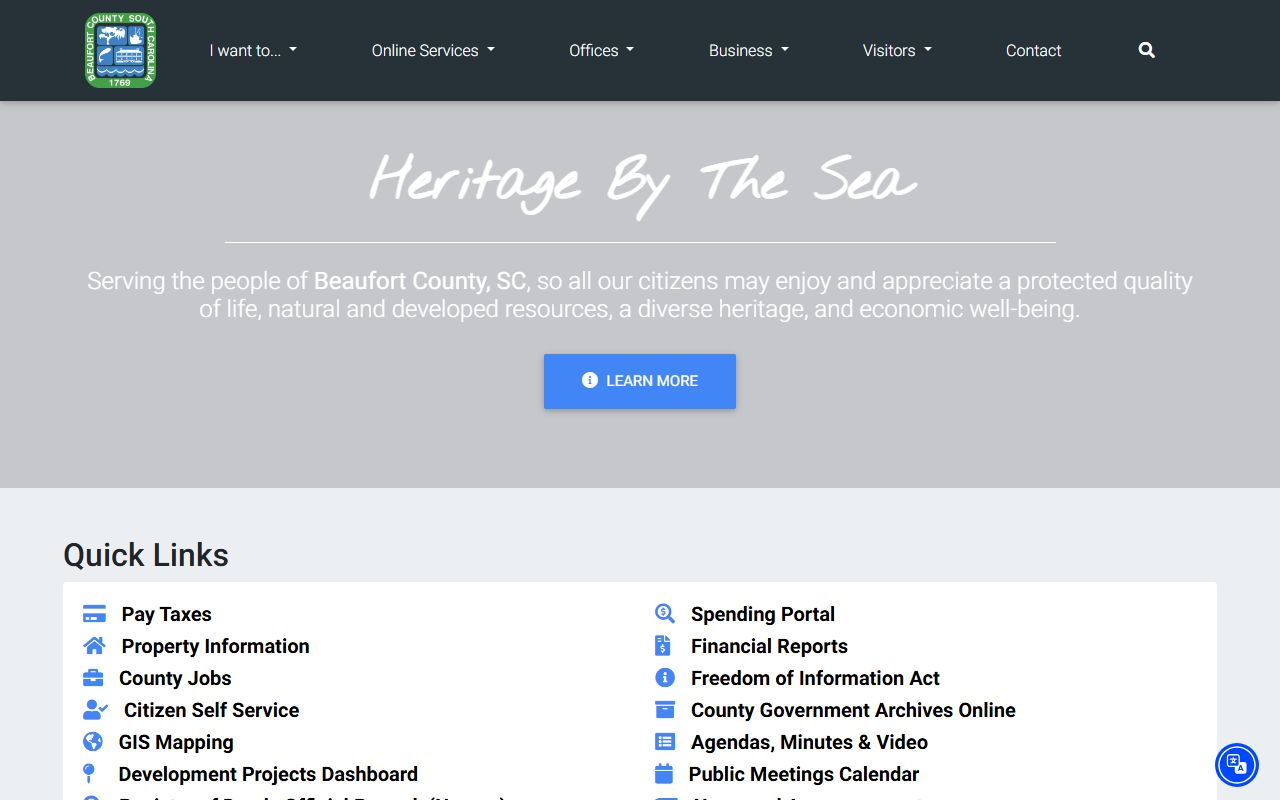
The Beaufort County government website serves as a starting point for residents who need contact information for the Treasurer, Auditor, Clerk of Court, and other departments that manage county financial records.
The Clerk of Court, Jerri Ann Roseneau, manages court-related funds including bail bond refunds, settlement deposits, and other court-held money that may go unclaimed. Under South Carolina law, court clerks must report these dormant funds to the State Treasurer annually. If you were involved in a court proceeding in Beaufort County and a payment was ordered in your favor but you never received it, the Clerk of Court's office can help you trace what happened.
SC Code Title 4, Chapter 11 governs how Beaufort County and all South Carolina counties handle unclaimed funds at the county level. County officers must keep accounts open to public inspection, and any person with a right to county-held funds can establish that right through the Court of Common Pleas.
SC Association of Counties and Beaufort Unclaimed Funds
The SC Association of Counties resource page for Beaufort County provides an overview of county government structure, elected officials, and services. This resource helps residents understand which local office manages which type of financial record, which is useful when gathering documentation to support an unclaimed property claim.
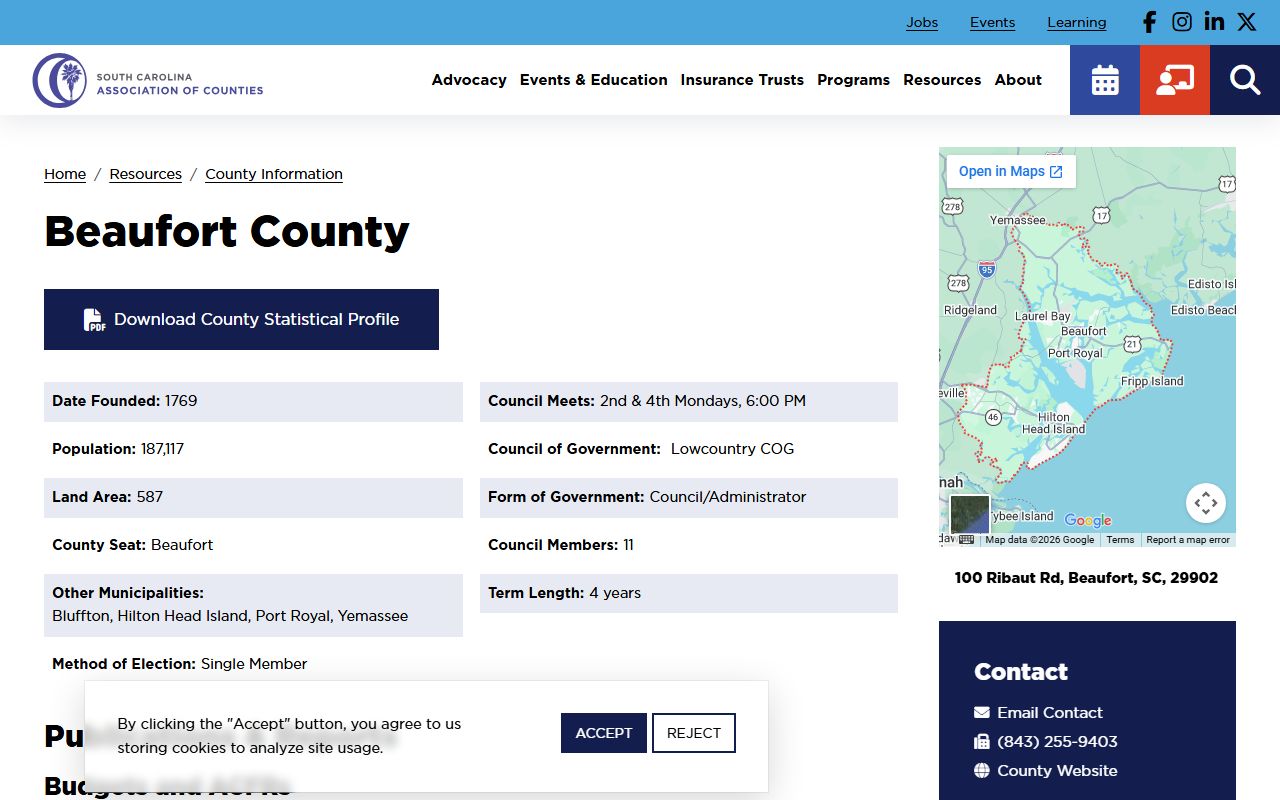
The SC Association of Counties helps county governments across South Carolina comply with state financial laws, including their annual unclaimed property reporting obligations.
The SC Association of Counties works with all 46 counties to support sound financial governance. In Beaufort County, this includes helping county offices understand their responsibilities when accounts become dormant and ensuring that funds held at the county level are properly transferred to the state system so that rightful owners can recover them.
How to Search for Beaufort County Unclaimed Money
The South Carolina official search portal is free, secure, and updated daily. Enter your first and last name in the search box. You can also add a city — Beaufort, Hilton Head Island, Bluffton, or Port Royal — to filter results by location. The site returns a list of matching accounts with the property type, approximate value, and the name of the original holder.
Beaufort County's large seasonal and transient population means that many accounts may be listed under former addresses in different cities or even different states. If you lived in the county temporarily — as a seasonal worker, military personnel stationed at MCAS Beaufort or Parris Island, or a retiree who has since moved — search under all names and addresses you have used while in the county.
The FAQ page provides clear guidance on what documentation to submit with a claim. Individual claims typically require a government-issued photo ID and proof of a prior address. Claims for a deceased person's estate require additional paperwork, including a death certificate and proof of your authority to act for the estate. After you submit your claim, a Claim ID lets you track the status online at any time.
Note: Military personnel and their families who were stationed in Beaufort County should search under all addresses used during their assignment, including on-base housing addresses.
Types of Unclaimed Property Common in Beaufort County
Uncashed checks dominate the unclaimed property landscape in Beaufort County. This category includes payroll checks from local hospitality and service businesses, vendor checks from county and municipal governments, insurance claim payments, and refund checks from utility providers. A check that was mailed to an address that no longer exists — or that simply got lost — can sit in the state database for years until the rightful owner searches for it.
Bank accounts are the second most common category. Savings accounts and checking accounts opened at Beaufort County bank branches that were later closed or merged may have gone dormant without the account holder realizing it. Certificates of deposit that matured without being renewed, and savings bonds that were never redeemed, also show up frequently in searches tied to coastal South Carolina addresses.
Insurance proceeds are another important category for Beaufort County residents. Life insurance policies owned by older residents or snowbirds who split time between states sometimes have uncollected benefits. If a family member owned property or a vacation home in Beaufort County and held a life insurance policy through a local agent, there may be unclaimed benefits in the state database.
The South Carolina dormancy table shows when each type of property becomes reportable to the state, from wages reportable after one year to travelers checks held for fifteen years. Reviewing this table helps set realistic expectations for when a specific type of account would appear in search results.
South Carolina Uniform Unclaimed Property Act
The legal framework governing all unclaimed property in South Carolina — including Beaufort County — is the Uniform Unclaimed Property Act, codified at Title 27, Chapter 18 of the SC Code of Laws. This law requires all holders, including Beaufort County businesses, insurers, and financial institutions, to report dormant accounts annually and transfer the funds to the State Treasurer. The general dormancy period under Section 27-18-30 is five years.
Wages and payroll are reportable after one year under Section 27-18-160. Utility deposits become reportable after one year under Section 27-18-90. Money orders have a seven-year dormancy period, and travelers checks are held for fifteen years before reporting. Each of these timelines reflects the likelihood that an owner would still want and need access to that type of funds within a given period.
Under Section 27-18-180, holders must complete a 120-day due diligence effort before the November 1 annual deadline. This means sending a notice to the last known address of the account holder. If the owner responds, the account is not reported. If no response is received, the funds are transferred to the state and added to the searchable database.
Federal and Additional Unclaimed Funds for Beaufort Residents
Beyond the state database, Beaufort County residents may have unclaimed funds in other systems. The US District Court for South Carolina holds unclaimed bankruptcy funds from federal court cases. These are payments issued to creditors or other parties in bankruptcy proceedings that were never cashed. Contact the court at 803-765-5436 to inquire about specific cases. This resource is separate from the state database and must be checked independently.
The Municipal Association of South Carolina guides municipalities like the City of Beaufort, the Town of Bluffton, the Town of Hilton Head Island, and the Town of Port Royal on how to report unclaimed municipal funds to the state. This ensures that local government refunds and deposits eventually reach the state database and can be recovered by their rightful owners.
For questions or direct assistance with a claim, the State Treasurer's Office can be contacted at 803-737-4771 or unclaimed@sto.sc.gov. The office is located at 1200 Senate St Suite 214, Columbia SC 29201.
Cities in Beaufort County
Beaufort County includes several well-known communities along the South Carolina coast. Search the state database using each city where you have lived or worked to find all possible unclaimed accounts tied to your name and those addresses.
Nearby Counties
If you have family roots across the Lowcountry, unclaimed money may be recorded under addresses in neighboring counties. Search these nearby counties for a thorough regional review.